
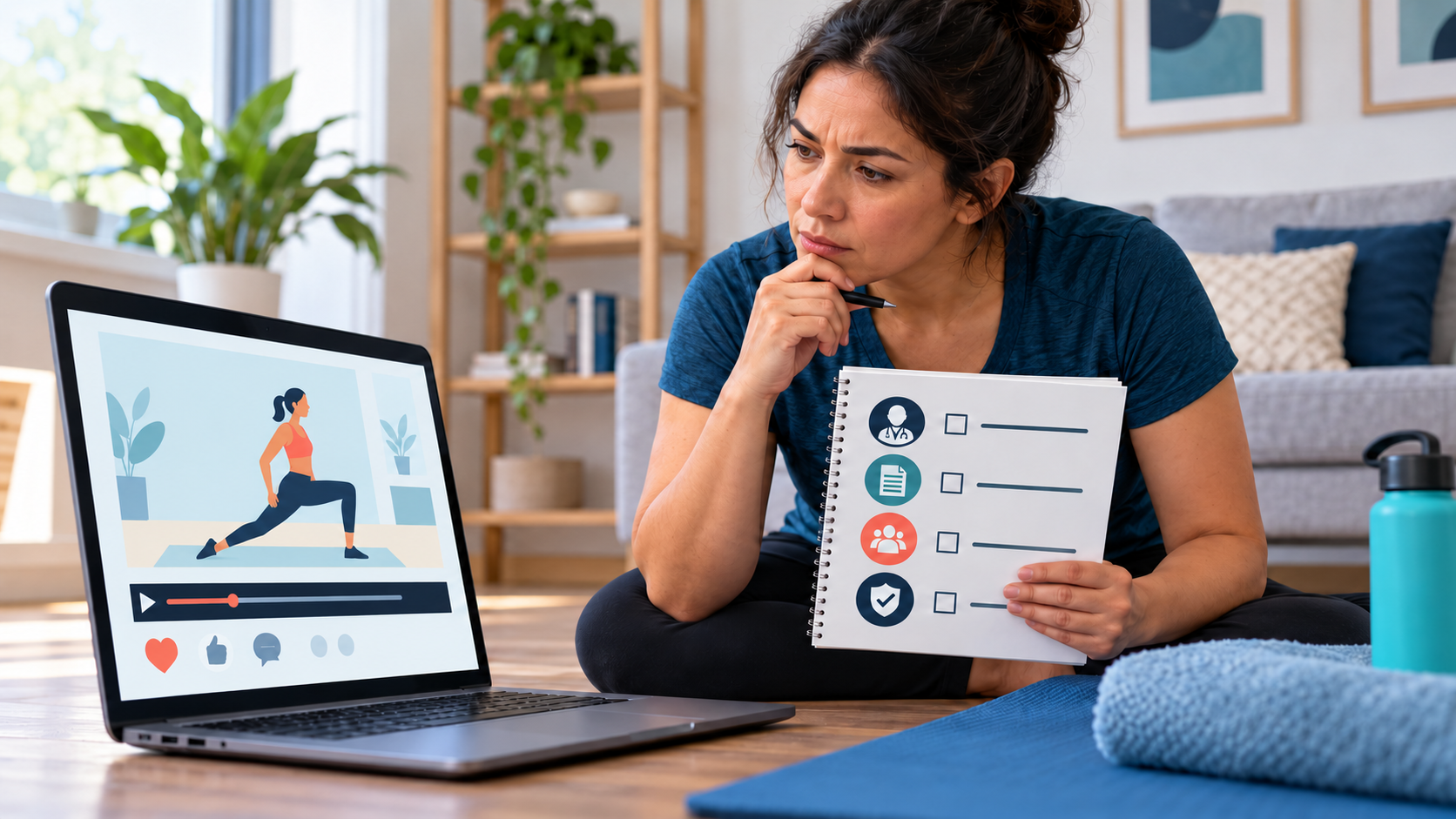
A platform shows what attracts attention and keeps the viewer watching. A view count may reflect a good title, editing, the age of a channel or the work of an algorithm. A like says the viewer enjoyed the video, but does not check indications, contraindications or the accuracy of explanations.
For a healthy person, an imprecise wording sometimes just means a less effective workout. For someone after surgery, or with diabetes, back pain or cardiovascular disease, the cost of a mistake is higher. That is why the authors of the new review assessed videos with exercises for people with chronic diseases specifically.
Li and colleagues searched seven sources up to September 2025. The analysis included 17 studies covering 1,515 videos. The geography was narrow: 13 of the 17 studies were carried out in Turkey. YouTube dominated — it was studied in 16 papers.
These numbers already set the limits of the conclusion. This is not a representative sample of all of YouTube, TikTok, Instagram and other platforms. A search on a given day also reflects the algorithmic results of that moment.
One of the review's primary studies, by Zhang and colleagues, examined the first 50 English-language videos for the query "neck pain". Forty percent of the videos contained exercises, yet average reliability and quality scores remained low to moderate, and the popularity index did not correlate with JAMA, DISCERN, GQS or the content-specific score. This is a concrete example, not a snapshot of the whole platform: the results were collected on a single day, for one query and one language.
The researchers used several scales:
These tools assess educational reliability, not the biomechanics of each repetition. A high score does not guarantee that a programme suits a particular person, and a low score does not prove that every exercise is dangerous.
The mean score was 2.96 out of 5 on the Global Quality Scale, 2.53 out of 5 on modified DISCERN and 1.49 out of 4 on the JAMA criteria. Prediction intervals were wide and heterogeneity was very high — I² from 93% to 98.6%. This means quality varied greatly between topics and samples.
Neither duration nor the number of views, likes, dislikes and comments differed between quality levels. In other words, engagement measures did not prove to be a usable filter for trustworthiness.
Videos from academic and institutional channels were more often in the good category, although the statistical certainty of this result was borderline. Videos from physicians' personal accounts were disproportionately represented in the low-quality category. This does not mean a physician's channel is by definition worse than an institutional one: the author's profile alone is no substitute for assessing the content.
Most of the included studies were cross-sectional snapshots of search results. They assessed published information but usually did not follow whether viewers performed the exercises and were injured. The review therefore shows a problem with the quality of the message, not the frequency of actual harm.
The topics concerned chronic diseases. The conclusion cannot be transferred automatically to videos about a healthy runner's warm-up, learning to squat or general physical activity. In addition, the DISCERN and JAMA criteria were developed primarily for medical information and may not capture every feature of demonstrating movement.
Before repeating a programme, check:
A useful video should clearly state its audience, purpose, limitations and sources. Demonstrating an exercise benefits from several camera angles, an accessible pace, subtitles and a description of stop criteria. An update date matters for recommendations that change.
A video's popularity is a measure of reach, not of scientific accuracy. The new meta-analysis found a low to moderate average quality of videos for people with chronic diseases and no useful link between engagement and quality. The best approach is to check the author, the intended audience, the risks and the sources, and to agree a medical programme with a specialist.